
Asking for help is a sign of strength.
Reaching out to a professional is a sign of strength.
Waking up EVERY SINGLE DAY and fighting for your life is a sign of strength.
You are not alone.


Asking for help is a sign of strength.
Reaching out to a professional is a sign of strength.
Waking up EVERY SINGLE DAY and fighting for your life is a sign of strength.
You are not alone.
Posted August 18, 2023
Psychology Today article
KEY POINTS
There has been much conjecture about possible detrimental long-term consequences of school closures on young children and adolescents, but now a new study published in the journal Scientific Reports provides convincing evidence that the mental health of school children was impaired by school closures during the pandemic.
The study surveyed 907 adolescents and their parents in Germany between May and June of 2020, during the first wave of the COVID-19 pandemic. Depression and psychosomatic symptoms were evaluated, in addition to other aspects of mental health. Telephone call volume to German youth crisis helplines was also analyzed. Both sets of data found higher depression and psychosomatic symptoms, particularly among boys, younger children, and adolescents, especially those living in homes with limited space.
The research suggests that increased strains on families forced to adapt to new work, school, and family life situations during the pandemic school closures promoted the increase in mental health problems in school children.
Worldwide, at least 13 percent of young people between the ages of 10 and 19 now have diagnosed mental health disorders, and the prevalence of depression and anxiety symptoms in this age group during COVID-19 have doubled. Whether this alarming mental health deterioration during this period is caused by school closures or other factors is unclear. This new study seeks to determine if school closures during the pandemic are responsible for the alarming increase in children struggling with mental health issues during the pandemic period.
The study compared data on adolescents’ mental health taken from a German survey, with other data on school closures throughout the country. The data showed that school closures were strongly linked with increased youth mental health problems. The longer adolescents were kept home from school, the more their mental health was impaired.
Not all children suffered the effects equally. Young children suffered the most from the strains caused by school closures. Boys coped much worse with school closures than girls. The effects were strongest in school-aged children living in homes that had limited living space. That factor supports the conclusion that family living stresses promoted the decline in mental health.
Disrupting daily routine and social interactions undermines the mental health of school children, the researchers conclude. Given the obvious importance of wholesome daily routine in family life and the value of healthy social interactions in nurturing the well-being of children, it is not surprising, in retrospect, that children’s mental health suffered when their schools were closed for prolonged periods and their family life was uprooted.
COVID-19 is not the first, nor will it be the last, serious contagious disease sweeping the globe. These new findings will be valuable in deciding how best to manage such outbreaks in the future.
About the Author

Psychology Today article
Updated August 15, 2023 | Reviewed by Abigail Fagan
KEY POINTS
If you believe that your divorce will cause your children to divorce, this would be an understandable belief.
After all, you modeled divorce as the solution to an unhappy marriage. Fortunately, the research doesn’t fully support that idea. Research has looked at the relationship between parental divorce and the likelihood of divorce in subsequent generations, referred to as “intergenerational transmission.”
The results show a slightly elevated risk of divorce. However, the studies caution that the likelihood of divorce is complex and influenced by various factors, such as socioeconomic status, marital quality, parental conflict, age at marriage, education, and income.
Therefore, because so many other factors influence marital relationships, we cannot say that your divorce is a determining factor, or will cause your children’s divorces. After all, correlation does not imply causation.
Remember, many children of divorced parents have healthy, stable marriages, and many people from intact families also experience divorce.
Children growing up in a divorcing or divorced family are often exposed to parental conflict, stress (financial, emotional, and psychological), and instability. They observe and may learn unhealthy relationship dynamics, or poor communication skills. These children may also have a lower level of education due to economic hardships and may lack positive and healthy role models of relationships. They may distrust relationships or find it difficult to form strong attachments.
Some studies suggest that genetic and environmental factors (parenting styles, level of conflict before and after the divorce, etc.) affect the “intergenerational transmission” of divorce. There are also individual personal characteristics (temperament, personality, etc.), as well as the social, cultural, and religious influences of their childhood. It is important not to make broad generalizations.
In fact, children of divorce may determine to learn from their family’s struggle and consciously make choices that contribute to their own successful marriages. They are probably more aware of the challenges of marriage, and may intentionally choose a different path. These children learn from their parents’ experiences and mistakes. They seek out healthy relationships, learn good communication skills, and use healthy conflict-resolution skills.
While studies show a slightly elevated risk, there are tools to minimize that risk. Parenting after divorce gets harder, but if you and your ex can work together with a common goal for your children, it is an excellent start.
Your children need strong relationship skills: Effective communication, empathy, emotional intelligence, problem-solving, and conflict-resolution skills.
Your children need positive relationship role models: Help them observe and learn from family and friends, mentors, or community programs.
Your children need to learn resilience and positive, healthy coping: Teach and model mental health awareness, and how to manage stress and strong emotions.
Your children need to understand divorce: Provide ways to talk about the challenges and consequences of divorce without turning them against their other parent. Talk about the importance of commitment, mutual support, and shared values in relationships. Help them develop a personal narrative of their family’s “restructuring” without shame or stigma.
Your children need cooperative co-parents: Consider parenting or co-parenting classes if you and your ex can work together for the sake of your children.
Your children need stability: The best education you can access, stable financial resources, affordable housing, and anything else that will alleviate stressors that may strain relationships.
As their parents, you can do a lot to strengthen your children’s support systems, including therapy or counseling if you see your child struggling or regressing.
If you have teens, talk to them about the importance of relationship education, and provide pre-marital counseling services when they begin to think about marriage. According to John Gottman, pre-marital counseling has been shown to reduce the likelihood of divorce. This type of counseling helps young couples have realistic expectations, develop new ways of managing relationship challenges and skills to navigate the predictable ups and downs of married life.
© Ann Gold Buscho, Ph.D. 2023
References
Amato, P. R. (1996). Explaining the intergenerational transmission of divorce. Journal of Marriage and Family, 58(3), 628-640.
Teachman, J. D. (2002). Stability across cohorts in divorce risk factors. Demography, 39(2), 331-351.
Wolfinger, N. H. (2005). Understanding the divorce cycle: The children of divorce in their own marriages. Cambridge University Press.Morereference
About the Author

AUG. 09, 2023
NAMI Blog Post
By Sarah Merritt Ryan
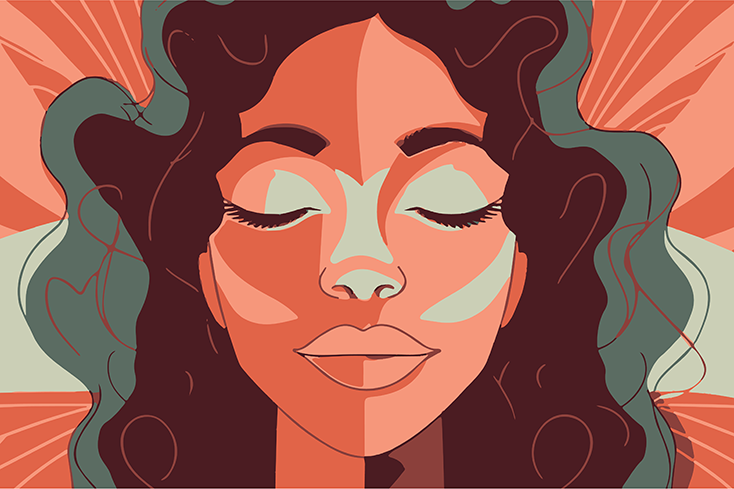
I have been living in recovery from schizophrenia for 11 years. While I haven’t experienced any symptoms for over a decade, I do not feel like I am the same person I was before my mental illness. This has often bothered me; sometimes, it feels like the only way I can become who I am “meant to be” is if I look backward and compare who I am now to who I was before my diagnosis.
I have put so much pressure on myself over the years to become “who I was” again — like that person, the 20-year-old version of myself, was better. For a long time, I went on a relentless quest to reclaim that person and simply “forget” the part in the middle, my 14 years of mental illness. However, with time and reflection, I am forming a new outlook on who I am. I have come to realize that the essential elements of my nature and character never left me, even while experiencing psychosis, and what truly makes me who I am is still present today.
Moreover, I’m realizing that I have come out for the better. Surviving schizophrenia, and making it to the other side, has given me a new and improved identity that I embrace.
The pain I’ve experienced in life has not only challenged me to care of myself; it has developed my empathy toward others. I believe that the more you experience in life, the more sensitive you are to others’ experiences — and you can speak to people in a way that truly resonates. I’ve realized that now that I have been through schizophrenia, I’m not afraid to go to painful, dark places with others who need compassion and reassurance that they are not alone. Ultimately, this has been a critical transition in my life: I opened my eyes to others’ suffering instead of my own.
Had I not been through something so painful, feeling other’s pain and truly connecting might feel uncomfortable because I wouldn’t understand it and couldn’t relate. I can identify with pain, and it means so much to me to be able to be there for others. I think I am a more authentic and compassionate person with others because of the pain I endured, and these experiences have taught me a new level of humility that keeps me grounded.
In the throes of my illness, when I struggled with wanting to give up, I had to find reasons to persist. I had to have purpose. When you search your heart like this — when your survival depends on it — you learn to filter out the things the things that truly don’t matter. With this kind of reflection, I realized that my purpose is to love and to receive love from others. Even when I was in the process of healing, I realized that if I acted in love, I couldn’t lose. Acting passionately for the benefit of others is what makes sense to me.
If I hadn’t had schizophrenia and hadn’t been stripped of everything, maybe I would have taken another path — maybe one that was only about self-improvement and traditional measures of success, rather than caring for others and forging my own path. I believe that life could have been more superficial if I hadn’t had to dig deep, live in survival mode and discover what truly matters in life. My pain and suffering have given me a direction and trajectory for how I want my life to matter.
One way I survived schizophrenia was learning what gratitude truly means and how to use this power in daily life. Early on in my illness, I found power in being negative and figured I was the only person in the world who wasn’t “normal.” I thought feeling sorry for myself was loving myself, but I was wrong. With time, I realized that the ultimate way to overcome the challenges of mental illness was to find gratitude in those challenges.
Finding gratitude in everyday life and the little things led to a deeper gratitude for my existence and positivity about my future. I am proud of what I have overcome, thankful for what some might take for granted and happy to have a life I can authentically call my own.
Ultimately, I am a more grateful, positive person than I was before my illness. I’m more content with my life now than I was when I was 20. Every step I take is something I’m grateful for — and I am content to move forward as the person I am now. I can still be true to myself and know who I am, even if I am no longer completely the person I once was. Nothing that truly matters is lost for good; and in fact, I am better due to my experiences.
“Sometimes you have to get knocked down lower than you’ve ever been, to stand up taller than you ever were.” – Unknown
Sarah Merritt Ryan is a writer covering mental illness topics like stigma, recovery and hope. She is a survivor of schizophrenia and is now a wife, mother and small business owner. She is a frequent NAMI Blog contributor, as well as a NAMI Connection Support Group (CSG) facilitator and an In Our Own Voice (IOOV) speaker in North Carolina.
NAMI Blog post
APR. 19, 2023
By Janna Herron
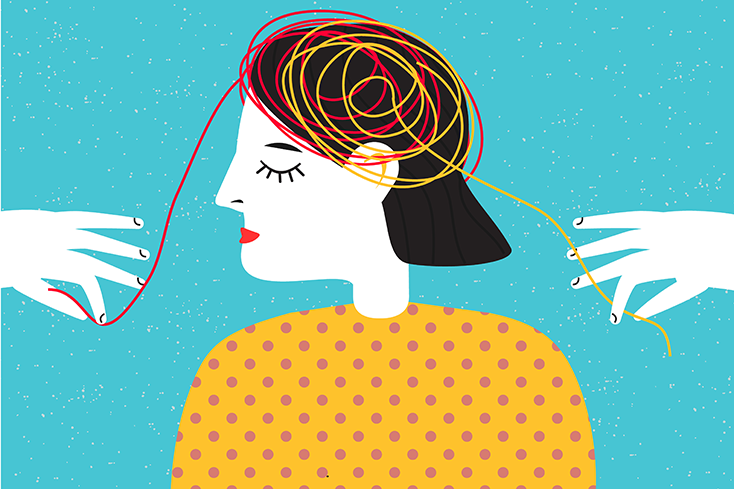
My roommate’s wailing put me to sleep that night. Yeah, right. I wished it could, just like a real lullaby. Instead, I turned over and pulled the thin covers over my head, trying to forget what left me in a plastic bed in the first place. Even worse, this was not my first rodeo, meaning not my first psych hospital. It was my fourth. No, fifth. No, wait… I lost count.
This is what it’s like living with a mental illness; on top of all my symptoms, I have memory loss, which makes me feel like I’ve aged about 30 years (which, in turn makes me even more depressed). And I’m just a college student — one who really, really needed a vacation. I came to call my hospitalizations “grippy sock vacations.”
So here I was on a plastic bed with paper thin sheets, freezing, with the lights still on at maybe 1 a.m. Time operates differently in the psych ward because you have to find a clock somewhere in the hallway if you want to know the time and figure out, if you’re lucky, what day it is. Some places don’t give you the luxury of knowing the date.
My roommate was still crying, and I didn’t blame her. Then she started screaming to be taken to a hospital because “something is wrong with the baby” — and well, she was not pregnant. The nurse came in and tried to calm her down. The who situation was sad, but by this point, I was so unsettled by what my roommate was yelling that I got up and insisted to sign myself out. I was there voluntarily, so it should have been easy, right?
As it turns out, leaving wasn’t that simple.
Note to self: read the fine print. The paper that I signed meant that I was placed on a 24-hour hold until the doctor could talk to me the next day. I hadn’t been prepared for the realities of life inside a hospital. I never had conversations about hospitalization and inpatient treatment — it simply wasn’t something anyone I knew talked about.
Ultimately, my protests were fruitless, and I had to return to same room I was trying to avoid, where sleep would be impossible for the night.
When the doctor saw me the next day, he said he would “take it to court” unless I stayed the number of days they were suggesting: 14. A whole two weeks? How was a college student, part-time nanny and dog mom supposed to be away from her life for that long? The amount of homework I would have to catch up on already had my head spinning, and this hospitalization, intended to ease some of this stress, was making the spinning worse. In the past, my stay had always been a week at most. With a two-week stay, I felt sure that the experience would just add to my trauma.
A few days later, I found myself in my dull, nude-colored pair of grippy socks, walking in a straight line to the cafeteria (talk about a flashback to elementary school, minus the fact that we’d probably get reprimanded if we showed up to school in socks). People in front of me were talking about the latest gossip. In this case, a fight had broken out. And not some small petty middle school fight — like an actual, scary, physical fight. In fact, I did remember hearing all the yelling from the staff once the alarm went off.
Later, I found out that it was my new roommate (they moved me into a different room) who had started the fight. I didn’t even notice my roommate had left that morning. I guess I thought that she was still sleeping and didn’t really pay that much attention. Mental illness, I’ve found, does this thing where the days pass, and everything seems to be displaced or not quite right — like accidentally putting face cream on a toothbrush, thinking it’s your toothpaste. That’s how every day feels.
We made our way to the cafeteria like all the elementary school kids in America — same schedule, same routine. It was the hospital’s way of teaching us that a routine will take part in curing depression and will make life so much easier. It’s easy to believe them until you find yourself right back at the same psych hospital where you began.
I was minding my own business, making small talk with some people I had become acquainted with, when I looked up to see something sail through the air. I think it was a biscuit. There was a bunch of yelling, and honestly, I couldn’t even tell what was going on. But I knew that a fight was about to break out. I’m more of an introvert, so I sank lower in my chair and pretended that I wasn’t there.
I’ve noticed a metaphorical grey cloud that appears over someone’s head when they start talking about life in a psych ward. I can almost guarantee that the subject makes people uncomfortable — even scaring some. Talking about mental illness and mental health is one thing, but when you mention the hospital, the room goes completely silent, as if someone just said something they were not supposed to. It may not be the cheeriest of topics, but it is still an important one because it is real.
Although hospitalizations for mental illness have come a long way from early days of abuse and neglect, there is still a lot that needs to be done. My most recent “grippy sock vacation” came with some valuable lessons.
Perhaps the most obvious lesson is recognizing that life is challenging; that everyone has a story and that the psych hospital, although not perfect, is an opportunity to get the treatment you need to return to the “real world.” However, this experience also taught me that patients need to be heard, particularly when they ask for improvements to their living conditions and care. And the hospital is a good place to practice how to advocate for yourself, not with physical fighting or by hiding under a table, but by calmly having a conversation, repeating your needs and making sure someone hears you. This how I got out of the hospital in 10 days, rather than the full two weeks.
Lastly, I learned the importance of community and a support system, because in the hospital, many of the patients understood me in a way the outside world did not.
Janna Herron is the author of “Transforming Tears,” found on www.jannaherron.com with other works in the making, hoping to use her writing to make a difference and share creativity. She is finishing studies in English and music at Texas Woman’s University and plans to further her education after graduation.
Psychology Today article
Posted July 30, 2023 | Reviewed by Abigail Fagan
Does it seem like people are getting more angry, more impatient, and less tolerant of others? Mass shootings, road rage incidents, and passenger misbehavior on airlines are all on the rise. What is causing this? Research in social psychology may have some of the answers. Here are four possible explanations for the rise in uncivil, and downright mean, behavior.
1. The Culture of Fear. The idea of the culture of fear in America was popularized, in part, by documentary filmmaker, Michael Moore, in his film, Bowling for Columbine. Moore postulates that it is our culture of fear that leads to gun violence and mass shootings, and he contrasts the U.S. with Canada, arguing that Canada doesn’t possess the same culture of fear (and subsequently, less gunplay). Is there any truth to this?
It is clear that fear can trigger the “fight or flight” response. If there is indeed a heightened sense of fear, then it is more likely that people will either avoid (flight) what they fear (e.g., the drop in people deciding to fly after 9/11), but the other response is anger and a triggering of the tendency to “fight.” In either case, fight or flight, people’s reaction when fearful may cause them to either lash out at others or shun them. This is particularly problematic when we consider that people who are unfamiliar and different than us may trigger a natural fear reaction and underlie some of our prejudice and discrimination of people whose skin is a different color or who engage in unfamiliar behaviors.
2. Resentment. Let’s face it. We are a society of haves and have-nots, and the wealth gap is widening every year. Philosopher and leadership scholar Joanne Ciulla (2020) argues that when people feel a sense of inequity they experience the emotion of resentment. This causes them to lash out at those who they feel are privileged. Clearly, resentment is a powerful, and understudied emotion, but it likely plays a big part in why people are mean to one another.
3. Increased Polarization. A very powerful social psychological force is what is known as in-group, out-group bias (also known as the “we-they” feeling, as in “we” are the good guys; “they” are the bad guys). While the we-they feeling creates unity and cohesiveness among in-group members, it leads to vilifying, and sometimes mistreating, out-group members. We see this in our political polarization in the US. While there have always been sides in politics, and accompanying protests against the other side’s practices or policies, we have seen an increase in counterprotests and an escalation in violence. This can hit home as there has been an increase in incivility even in families. How many times have you heard about Thanksgiving arguments when someone brings up politics in a politically-divided family?
4. Social Norms and Standards. One thing that keeps conflict in check is what social psychologists call “shared norms” — or rules that govern our behavior, telling us what is appropriate and socially acceptable, and when we are in violation of those standards. Clearly, the rise of divisive politics has led to an increase in uncivil behavior. Think back a bit and there used to be some standards of decency and decorum in politics. Some political behavior was deemed unacceptable, but the standards have been lowered in recent years, with politicians like Donald Trump seemingly breaking through all of the norms of civility with bullying and name-calling tactics. This sort of behavior in our political leaders has a tendency to make the public feel like it is okay to do the same.
The culture of fear is deeply embedded and hard to change, but we should all realize, as FDR said, “we have nothing to fear but fear itself” — at least not usually. We should all try hard to not give in to our emotions and think things through when fear triggers our primitive “fight or flight” response.
Resentment is a tough one, but as society (and hopefully, government) tries to make things more equitable, try to focus on what we have rather than what we don’t.
Psychology tells us that to combat the we-they feeling we need to focus on shared goals — “superordinate” goals that both sides value. We need to realize our commonalities, and focus primarily on similarities and shared purpose rather than differences.
Here’s another post on how we might make things better.
References
Furedi, F. (2006). Culture of fear revisited. A&C Black.
Gardner, D. (2008). The science of fear: How the culture of fear manipulates your brain. Penguin.
Ciulla, J. B. (2020). Leadership and the power of resentment/ressentiment. Leadership, 16(1), 25-38.
About the Author

Psychology Today article
Updated July 21, 2023 | Reviewed by Monica Vilhauer
KEY POINTS
Gaslighting can cause confusion and issues with self-esteem.
No one is entirely immune to the effects of gaslighting because its tactics are highly effective. Gaslighting is any attempt made by someone to instill doubt in your perception of reality. It can present in any relationship where an imbalance of power exists—not just romantic relationships but also relationships with family and friends, at work, in the medical field, in academia or in societal structures as a whole. The aim to negatively impact ego strengths and personal values causes confusion that makes it difficult to determine when gaslighting is even happening.
The payback for the gaslighter is the erosion of their target’s self-esteem, which allows them to gain control over the other person and perpetuate various cycles of abuse. Self-esteem is the confidence in one’s own right as a person to be happy, worthy and deserving of getting what we want and need. Someone who displays strong self-esteem is threatening to a gaslighter or emotional abuser, as it is more difficult to manipulate them. In those cases, the gaslighter may double down on their efforts, which is why awareness is a key factor to self-protection.
1. Deception: Even when presented with evidence, gaslighters will blatantly deny personal wrongdoing, commonly by manipulating the truth. The gaslighter will attempt to make their victim think they are crazy for thinking they would do anything negative in the first place, no matter how bizarre the situation appears. This form of gaslighting leads to confusion and self-doubt, as the target’s thoughts will become distorted to fit the gaslighter’s version of reality. An example was when my co-author, survivor and podcast host Kendall Ann Combs confronted her ex-abuser after he “accidentally” cut a chunk of hair off her head. The situation was so bizarre and startling that when he gaslit her using deception to think she was being unreasonable and paranoid, his tactics worked.
Having a firm sense of one’s own reality is important when considering self-esteem. Studies have shown that reality therapy, which is a client-centered form of cognitive behavioral therapy, is an effective therapy for improving self-esteem. This form of therapy focuses on improving current situations in our lives, as opposed to fixating on problems from the past, and helping us get needs met in the present. A gaslighter wants nothing to do with the reality of the present and will instead continue to fixate on the past which is more difficult to organize and defend.
2. Indirect persuasion. This form of gaslighting often occurs after the stages of love-bombing where you have grown to idealize your abuser. Once they have your trust, they can more effectively make suggestions that are not conducive to your actual desires, appearing innocent while doing so. Jackson MacKenzie outlined this tactic in his book, Psychopath Free, where the gaslighter insults someone from a past relationship, while complimenting you in order to get you to comply with things they want from you now. Some examples given in his book include:
These “compliments” are effective forms of manipulation meant to silence your desires, needs, and emotions. If you choose to express contrasting thoughts, your abuser will likely counter with the silent treatment or other forms of verbal aggression, whether it be blatant or passive. Having your own opinion puts you at risk of losing the idealized version of you they’ve created, but constantly censoring your thoughts and emotions is harmful for your self-esteem, as it impedes your ability to think for yourself and assert your own needs.
3. Projection: This is a tactic used by a gaslighter who struggles with their own self-esteem, so they aim to ruin yours. The gaslighter will defend their insecurities by denying personal issues and “pushing” them onto others. The phrase, “the pot calling the kettle black” is an effective way to describe this form of gaslighting. Once your self-esteem is negatively impacted, causing self-doubt, it makes accusations about your character flaws more believable. No one should intentionally want to make you feel bad about yourself or to diminish your self-esteem or self-worth. No matter what. And if you find yourself in a cycle where someone constantly is, it is likely you are experiencing gaslighting in the form of projection.
4. Aligning People Against the Victim. The gaslighter will work to make their target believe that others think they are just as crazy or defective as the gaslighter says. This tactic is neither casual nor passive. Instead, it is overtly dismissive and aggressive, further eroding self-esteem and making it difficult to connect with positive feelings about oneself. Imagine if you woke up one day, hospitalized, and were told that you had suffered a mental breakdown and everything you thought happened last week was a dream. Now imagine it was not just one person who told you this but a collection of people, even those you care about. The effects of a thorough gaslighting regimen can feel just as disarming. By working to align others against you, it is less likely you will reach out, even though processing your experience and getting support from the people you trust is exactly what is needed.
Reclaiming Your Self-Esteem and Sense of Reality
Connection with others can help improve self-esteem after gaslighting.
The last person who will help you reclaim your self-esteem is the one who is gaslighting you. They do not want you to have confidence in your right for joy and love, and so any efforts you make to defend yourself will likely be weaponized with other forms of gaslighting. Choosing not to go to the gaslighter for confirmation is the first step in reclaiming your self-esteem.
Next is addressing your inner self-talk and cognitions. Because self-esteem is an experience realized through thoughts and perceptions, engaging in compassionate self-talk can be a powerful way to regain your self-worth and sense of reality. Kristen Neff, self-compassion expert, author and professor suggests talking to yourself as you would a friend. You can try this by thinking of a goal you are struggling to accomplish and checking in about how you normally speak to yourself about it. Now ask yourself if you would say these things to a friend or loved one? If not, how can you reframe these statements to be more compassionate? Having a growth mindset and allowing for mistakes will result in more creative thinking and proactive action.
Finally, and potentially most important, is choosing to surround yourself with supportive people. Get perspectives from others about the gaslighting, and fact check with yourself and with them. If you are not ready to reach out and delve into your painful experiences, spend time with your inner self through journaling, meditation, or speaking out loud. Sorting through your feelings can help you regain your reality, allowing you to remember that you are not crazy, you are not alone, and you are not broken.
Portions of this post were adapted from my book co-authored with Kendall Ann Combs: What I Wish I Knew: Surviving and Thriving After an Abusive Relationship and my forthcoming book: Gaslighting Recovery for Women: The Complete Guide to Recognizing Manipulation and Achieving Freedom from Emotional Abuse.
References
Rosidi, Rosidi, Anwar Sutoyo, and Edy Purwanto. “Effectiveness of reality therapy group counseling to increase the self-esteem of students.” Jurnal Bimbingan Konseling 7.1 (2018)/ 12-16.
About the Author

Posted July 20, 2023 | Reviewed by Ray Parker
Psychology Today Article
Given the recent viral arguments taking place on social media debating therapeutic terms like boundaries, coercive control, ultimatums, and consent—specifically regarding the onetime couple of surfer Sarah Brady and actor Jonah Hill—I thought defining and discussing these terms could be a helpful tool for many dating and/or established partners out there.
What seems to be happening out there on social media platforms like Instagram and Twitter is a war of words about power during relationships and after a breakup. As these two people are public figures and not known to me, I won’t claim to know what went on in their relationship, but I think there are many lessons here for people out there entering into, or already in emotionally committed relationships, that I’d like to help—defining and clarifying these therapy terms.
According to The American Psychological Association, a boundary is “a psychological demarcation that protects the integrity of an individual or group or that helps the person or group set realistic limits on participation in a relationship or activity.”
In psychotherapy sessions, therapists help their clients set boundaries when they:
Many times these clients have been taught, either explicitly or implicitly in their family of origin and/or community, that their desires or needs are not as important as others around them. This kind of psychological modeling could have come from parents, siblings, grandparents, a religious leader, a romantic partner, and/or the community as a whole. For example, a client who was routinely told she was selfish each time she sought help with her anxiety over schoolwork as a kid, or when a classmate bullied her, became an adult who felt like an imposter at work and submitted to every demand her boss made of her, even when it was above and beyond what was expected of her colleagues.
In a romantic relationship, a boundary is a request by one partner that actually enhances the relationship. For example, a partner requests that his girlfriend make more of an effort to arrive on time for the dates they’ve agreed to because it shows that she has respect for their agreements and for the time they’ve carved out to be with one another.
Another example regarding a sexual encounter that I’ve heard frequently in therapy sessions occurs when a woman requests that her husband refrains from abruptly touching her breasts right after she’s consented to be intimate with him, as it is a sexual turn-off rather than a turn-on. When a person hasn’t had these kinds of requests modeled in a healthy manner growing up, they lack the confidence, skill, and “sex esteem” to listen to their needs and make these requests smoothly.
Alternatively, if they’ve seen a parent make demands, threats, or demeaning comments when asking the other parent to change a behavior, the child has witnessed coercion.
In the Netflix show Jewish Matchmaker, a religious, single women named Fay goes out with a man named Shaya. They seem to enjoy one another’s company, and sense of humor, and they both practice Orthodox Judaism and are looking for a spouse whom they can marry and and have children with.
However, when Fay says that it’s important to her that her husband pray with a group of other men three times a day and devote himself to studying the Torah, Shaya lets her know that he prays on his own in the morning and that otherwise he’s not a studious kind of Jew. She gives it some thought after the date and in a respectful manner lets him know that this wouldn’t fit with what she’s looking for in a family. They part on good terms as each understands and respects the other’s religious boundaries. After deep reflection—we even see a scene of Shaya talking to his rabbi about his ambivalence—they agree that they are not each other’s people.
Back to the Jonah Hill/ Sarah Brady drama: Why are so many people defending Hill and attacking Sarah Brady? It’s because she released texts she received from her ex in public without his permission. While sharing private texts between two people (at least those not related to a crime) is not illegal, Brady may have broken a relational boundary: Partners assume that what is shared between them is to be kept from public scrutiny via social media.
This is what we would call an implicit agreement. However, as a couple and sex therapist with many years of practice, I can tell you that this is one of the all-time misunderstandings in most relationships: Don’t rely on implicit agreements. Why? Because what one partner may consider private information the other may feel freer to share either with close friends or with the world. That is why having meaningful conversations about what boundaries you want to keep in your relationship, especially around the sharing of intimate information, is so important.
Secondly, expecting certain boundaries to be adhered to can also be misused by partners who are either trying to control the actions of the other or are beginning to groom the partner for future emotional abuse and/or physical abuse. I believe that the many folks online who are angrily reacting to Hill’s alleged use of the term “boundaries” view this usage as a covert step towards manipulative control and coercion (which I’ll talk about in a future post).
The fact that Brady claims to have taken down some of the photos from Instagram that Hill allegedly found disagreeable or objectionable has been interpreted by many of her online followers as evidence that she was being coerced. But was it?
One concept I teach partners is “differentiation,” which means that you can remain confident in understanding how to nourish and expand your self-esteem while respecting your partner to have different ways of doing so for themselves without damaging the relationship.
For example, one partner might depend on their yoga practice and community for helping them keep their mental health stable and their body equally strong. If their partner isn’t as physically agile but has a good sense of differentiation, they can lift and support their partner’s commitment to their work/health balance without viewing it as a negative reflection on them. Another way to express differentiation?: You do you, I’ll do me.

What if the texter (allegedly Hill), revealed by Brady on her Instagram, instead wrote: When I see you in the photos, I feel insecure of losing you to another man. It triggers my jealousy and anxiety when you post photos of yourself in a bathing suit and I’m not sure how I will handle this going forward. But you shouldn’t change what makes you special and vital. You do you, I’ll do me. And I don’t think I can show up as a supportive partner for you in the way you deserve. I’m so sorry, there’s nothing critical I am saying about your actions, this is about work I need to do or the type of partner I would be better suited to. This is not on you, this is on me to figure out.
References
Liberto, H. “Threats, Warnings, and Relationship Ultimatums” in the Routledge Handbook of Love in Philosophy, ed. Adrienne Martin, Routledge (2019)
https://dictionary.apa.org/boundariesMorereferences
About the Author

Online:
Center for Love and Sex, Facebook, Instagram, LinkedIn, Twitter
SAMHSA Blog Post
Sept. 28, 2022
According to the U.S. Census Bureau, older adults (age 65 and over) represented 16 percent of the total U.S. population in 2019. And in 2020, older adults ages 50 to 85+ accounted for 19,968 deaths for a crude rate of 16.86 per 100,000 according to the Centers for Disease Control and Prevention (CDC) Web-based Injury Statistics Query and Reporting System. Recognizing this population is disproportionately affected, it’s critical that we address suicide prevention in this group of Americans.
Baby boomers, those born between 1946 and 1964, have had a relatively higher suicide rate at any given age than earlier or subsequent birth cohorts. Demographers estimate that by the year 2030, over 71 million Americans will be age 65 or older, or 20 percent of the U.S. population. Baby boomers are a group with historically high rates of suicide and as they enter older adulthood, it is anticipated the rate of suicide in men and women will rise again. Older adulthood is a time of greatest risk and could result in substantial increases in the number of senior citizens dying by their own hands (Conwell, et al., 2011). Collectively, older adult caregivers, the health community, government and non-government stakeholders, and the general public alike can change that trajectory.
In order to intervene, health care providers and caregivers must be able to recognize the warning signs of suicide in older adults. Being aware of certain behaviors that can indicate thoughts of self-harm may help save a life. The SAMHSA website has published warning signs that may indicate someone is at risk of suicide:
Mental health providers should have early-career training in suicide prevention, suicide behavioral interventions, and suicide postvention. Graduate students in social work, psychology, counseling, and even gerontology often do not receive adequate skills training. As a result, too many providers with graduate degree preparation are learning on-the-job how to support individuals with suicidal ideation and/or post suicide attempts.
One example of a prevention strategy that can help reduce suicide attempts among older adults is to increase health care provider awareness of substance use and mental health conditions in older adults. To achieve this, evidence-based screening tools can be used in clinical settings to screen for suicide risk.
A critical national resource for those experiencing crisis is the 988 Suicide and Crisis Lifeline. The Lifeline is available 24/7 and connects mental health professionals to those in crisis. Safety planning is another important tool to prioritize coping strategies and sources of support for individuals. These tools offer wide ranging guidance on older adults and suicide prevention, substance use, program best practices, and clinical support.
While observing a single warning sign may not indicate thoughts of suicide, noting multiple signs and other risk behaviors, major life events, medical prognosis, and/or mental health diagnosis could indicate suicide risk. There are many strategies that can be used to prevent a suicide death among older adults.
Lastly, providers across mental health disciplines can refer to resources that reinforce best practices, including SAMHSA’s Promoting Emotional Health and Preventing Suicide: A Toolkit for Senior Centers and the CDC’s resource, Preventing Suicide: A Technical Package of Policy, Programs, and Practices (PDF | 6.1 MB).
References
NAMI Blog Post
FEB. 08, 2021
By Kathy Sullivan, MAAT, REACE
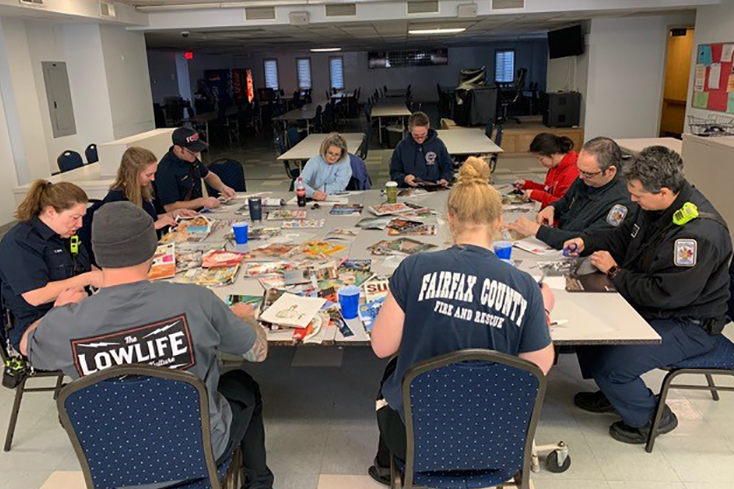
Who really wants to “practice” self-care? It can feel like just another task to put on our to-do list. However, preventative care is an essential element to protect emergency services professionals from the potentially damaging effects of what they regularly witness.
If self-care sounds tedious and boring, then consider incorporating the creative arts into your resiliency strengthening regimen. The creative arts have proven to be an effective processing tool for stress, trauma and physiological regulation. The ultimate goal behind focusing on self-care with emergency services personnel is to manage and decrease the cumulative stress, to keep our heroic men and women fit for the fight. So why not have some fun while we strengthen our minds, bodies and spirits?
Here are several ways to incorporate the act of creation to practice self-care.
Doodling
If you like to doodle then try to do it more often and intentionally. Did you know that doodling can have a meditative effect on the mind and body? Doodling is a perfect act to do if you’re feeling stressed or anxious. If you don’t know where to begin, start by drawing a meaningful word. Fill in your word with different lines, shapes or marks until the space is completely filled. Add color if you desire. Search online for “mandala making” and “zentangle making” if you would like to dive deeper into this cool form of meditation. There is no wrong way to doodle!
Music
Music is powerful. How many times have you been in a certain mood and then a song comes on and your mood instantly changes? Music has a visceral effect and has the power to calm, energize and heal. Choose some of your favorite music and take time to tune in. Choose your feel-good music after a bad call or a bad day to intentionally replace certain sounds. For an added benefit, tap your hands or feet to the beat. Dance, sing or even take a class. Become immersed and appreciate that this act is strengthening your resilience, which will only make you stronger for the job.
Cooking
If you like to cook, then try to cook with intention and purpose. (Play your favorite music while cooking!) For those who feel that cooking is a chore, make an attempt to change your frame of mind from I need to cook to I get to cook. Try to use your senses as much as you can and honor the fact that you are creating something that is not only good for processing stress, but will also feed your soul. Smell the different aromas. Feel the different textures of the food. See the variety of colors. Listen to the chopping or sizzling of your dish complimented by your chosen background music. Taste your creations. Cooking is a full sensory experience, so try it just one night with the full intention of becoming absorbed in the process.
You can step up these suggestions by including your partner, spouse or children, which will also promote family-time, bonding and stress relief. In order to manage life and death situations as first responders, you already have strong creative muscles. So let’s have fun and flex them a bit further.
Kathy Sullivan, MAAT, REACE, is a professional artist and co-founder of the Ashes2Art program. Ashes2Art is a non-profit organization offering creative arts services to emergency services personnel and their families as part of a preventative wellness initiative. The mission to offer creation to counterbalance destruction has proven to be a fun natural approach to strengthen first responder resiliency. To learn more about free art classes for emergency services personnel please go to: www.ashes2art.org
Psychology Today Blog Post
Posted February 19, 2021

An essential part of recovery is recognizing and labeling the “voice of the addiction” inside your head. Though addiction can take many forms, the voice of addiction is startlingly the same.
The following letter comprises many letters that people in recovery wrote to the addict’s voice inside them. While working in group therapy, in conjunction with their 12-step work, people found that writing a letter to that voice helped them separate from it and reclaim their power.
I share this letter to encourage anyone who is trying to win the war against addiction. May this exercise help you to heal and rediscover your authentic voice again. *
Dear Voice of Addiction Inside Me,
I’m not letting you run my life anymore. I’m fed up with your toxic delusions, the falsehoods you whisper in my ear. When you told me not to trust anyone, I believed you. When you told me to lie about my addiction, I did. Every step of the way, you fueled the destructive hunger that caused me to feel empty inside.
You convinced me I was worthless. Without my addiction, I couldn’t survive. You made me believe I was indifferent and numb, that no one could love or understand me. Without you, I was a nobody.
Today I take my power back. Today I stop listening to you, believing you, and stop doing what you say. Today, I finally recognize you as the demon that you are.
You nearly destroyed my life. You convinced me to turn away from my family, abandon good friends, and replaced them with bad ones that ushered me down the path of self-destruction.
You stole memories, deleted years of my life, and filled them with darkness and shame. You poison everything in me that you touched. You drain the warmth from happy memories and replaced them with emptiness and a yearning for more substances that could never be quenched.
I let you control me, and I take responsibility for that. I let you transform me into a selfish monster, a monster who hurt without feeling, lied without remorse, and turned my back on those who dared to help me.
Today, I say this to you, addict voice inside me: You won’t trick me anymore. Today I recognize that I am just a pawn in your plan to destroy another human being. I may not be able to silence you completely, but I will banish you to the sub-basement of my life where your lies and distortions are undecidable murmurs.
No matter how many times you whisper your lies in my ear, I will reject you. No matter how many times you attempt to distort my thinking, I will shut you down. No matter how many times you try to lead me back to the false identity of addiction, I will stand in your way again.
Today, your spell is broken. Today, I reclaim my authentic voice. Today I replace your darkness with hope and surround myself with others also determined to defeat you. I embraced a new truth: I am valuable, I am good, and though I am wounded, I am not broken.
So pack your bags, addict voice; you’re not welcome here anymore. I will fill those empty spaces you left inside me with creativity and fellowship. I will seek art, music, poetry, dance, and photography, all the creative forces that turn pain into purpose and anger into energy.
I know it’s going to take time; it’s going to take practice. There will be dark days of struggle and despair when I feel like I’m losing. But I will rise again and point my anger, not at my loved ones, not at my family or friends, but where it belongs: I will point my anger at you and the injustices of the world.
This is my prayer, this is my determination, and this is the destiny I chose. Goodbye, addict voice, I don’t have time for you anymore.
Sincerely,
Former Addict
About the Author
 vstarbhs.org